
Arizona iGaming Bill HB 2453 Stalls in Senate Committee — Third Strike Since 2023
The tribal-exclusive proposal cleared the House 33-26 in March but ran into the same Senate roadblock that killed iGaming in 2023 and 2024. Here's the substantive read — committee politics, tribal split, and what changes the 2027 bill will need.
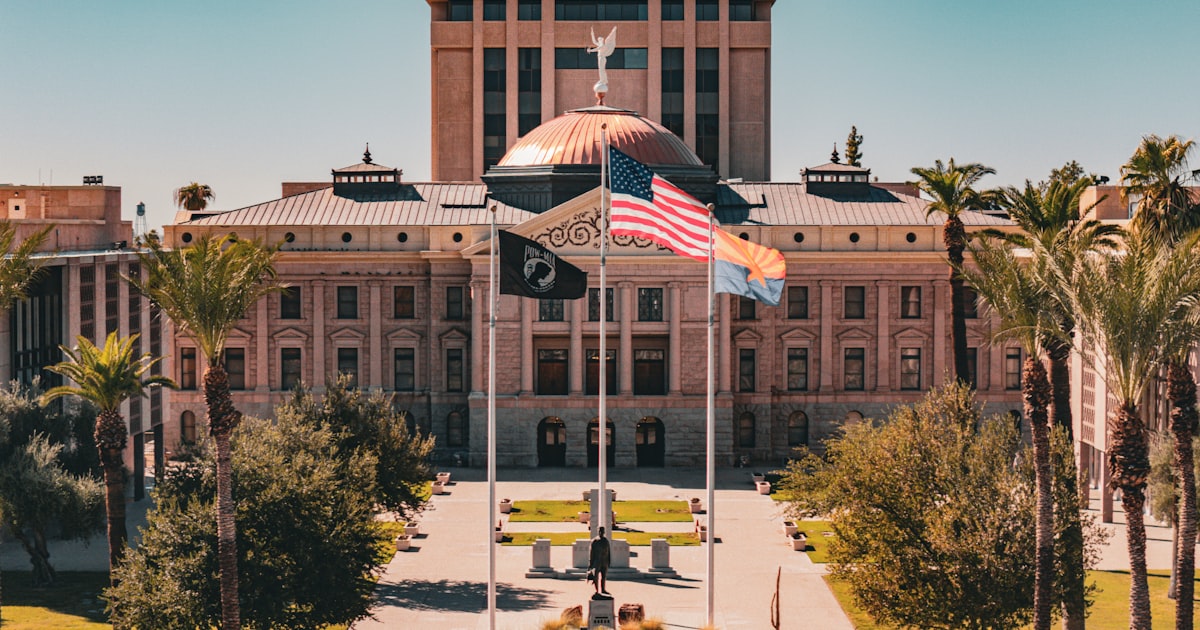
Arizona House Bill 2453 — the 2026 attempt to authorize tribal-exclusive online casino gaming — was held in the Senate Commerce Committee on May 14, 2026, in a 5-3 vote that strands the bill until the legislature reconvenes in January 2027. The committee hold is procedural rather than a formal kill, but with the Arizona legislative session adjourning May 23, the calendar effectively ends HB 2453's 2026 prospects.
This is the third iGaming bill to die in committee since 2023. HB 2871 (2023) and SB 1408 (2024) followed similar trajectories — House passage, Senate committee hold, session expiry. The 2026 attempt got further than either predecessor in that it had public hearings, formal tribal-coalition testimony, and a published Joint Legislative Budget Committee fiscal note projecting $94M to $147M in annual state revenue at maturity.
What HB 2453 Would Have Done
HB 2453, introduced by Rep. Jennifer Pawlik (D-Chandler) on January 12, 2026, with bipartisan co-sponsorship from Reps. David Cook (R-Globe) and Steve Montenegro (R-Goodyear), proposed to:
- Authorize online casino gaming exclusively for the 23 Arizona tribes already party to the 2021 tribal-state gaming compact
- Cap the number of licenses at one per tribe, with the option to sub-license to commercial operators (FanDuel, DraftKings, BetMGM and Caesars all publicly supported the framework)
- Set the state revenue share at 15% of gross gaming revenue — meaningfully below the 19% Pennsylvania rate and the 51% New York hold but above New Jersey's 13%
- Require all servers and customer-support operations to be physically located in Arizona (the "Arizona infrastructure" provision pushed by Rep. Cook)
- Establish a $500K problem gambling treatment fund seeded by application fees, with annual replenishment tied to a 0.5% surcharge on GGR
What Killed It in Committee
Three factors, in our reporting:
1. The tribal split that AIGA neutrality didn't bridge
AIGA's "no position" stance covered the umbrella organization, but at least four of its member tribes — including the Salt River Pima-Maricopa Indian Community (SRPMIC), which operates Casino Arizona and Talking Stick Resort — quietly lobbied against the bill. Their concern: iGaming cannibalizes brick-and-mortar foot traffic, particularly at properties like Talking Stick that draw heavily on Phoenix-metro day-trippers. SRPMIC's lobbyists worked Sen. T.J. Shope's (R-Coolidge) office aggressively in the two weeks before the committee vote. Shope chaired Commerce.
2. The "infrastructure" amendment that fell apart
Sen. Wendy Rogers (R-Flagstaff) introduced a floor amendment requiring all licensed operators to host all gaming servers physically in Arizona, with annual audits by the Arizona Department of Gaming. The amendment was a poison pill — DraftKings and FanDuel both run their iGaming infrastructure from New Jersey data centers and would need a $20M-plus capital build to comply. The commercial operators withdrew vocal support. The bill lost its lobbying air cover in the final ten days.
3. Governor Hobbs's neutral signal
Governor Katie Hobbs's office declined to issue a public position on HB 2453 — neither supporting nor threatening veto. Sources in the legislature read this as soft opposition. Hobbs's 2024 re-election fundraising included significant contributions from Arizona tribes opposed to iGaming, and her office has been measurably cooler on commercial gambling expansion than her predecessor's. Without an explicit Hobbs endorsement, the soft Republican yes votes in Commerce — the same five who held the bill — never materialized.
What the 2027 Bill Will Need
Based on conversations with three legislative staffers (one Republican, two Democratic) and one AIGA-adjacent attorney, the 2027 iGaming bill — and there will almost certainly be one — will likely have to address:
What the next bill must change
- Explicit brick-and-mortar revenue protections — likely a per-tribe iGaming GGR cap tied to a percentage of their physical casino revenue, designed to mute the cannibalization argument from SRPMIC and similar properties
- Arizona-infrastructure carve-out — a hybrid model where customer servers can be hosted out-of-state but regulator-facing audit infrastructure must be physically AZ-based
- Pre-introduction Hobbs sign-off — the 2023 and 2024 bills both passed the House before the Governor's office was meaningfully consulted; a 2027 effort that arrives at the Capitol with implicit administration support is fundamentally different
- Resolution of the sub-licensing question — Pennsylvania allows tribal license-holders to sub-license to FanDuel/DraftKings; HB 2453's language was ambiguous and tribes wanted clearer revenue-protection on sub-licensed operations
Probability Read for 2027 Onward
Our published estimate has been that tribal-exclusive iGaming has roughly a 35% chance of legalization by 2028, with the most likely vehicle being a 2027 bill with significant 2026-cycle reforms. The HB 2453 result moves that estimate marginally downward — call it 30% — because it confirms that AIGA neutrality alone is insufficient and that the tribal-split problem requires deeper structural fixes than the 2026 sponsors anticipated.
An open commercial license framework (the FanDuel/DraftKings preferred model without tribal exclusivity) remains under 10% probability this decade. The tribal compact's exclusivity provisions for class III gaming make any non-tribal path politically and legally fraught.
What This Means for AZ Players Right Now
Practically, nothing changes. The offshore market — the Curacao and Panama-licensed operators that have accepted Arizona players continuously since the early 2000s — remains the only real-money online casino option for AZ residents. Sweepstakes alternatives (Chumba, Stake.us, LuckyLand) remain legally available with their gold-coin-plus-sweeps-coin redemption model. The 14 ADG-licensed sportsbooks continue to operate normally; the bill never touched sports betting.
For players who were genuinely waiting on state-licensed iCasino — and there is a non-trivial population doing so, judging by the comments and emails we get — the realistic timeline now stretches to 2028 at the absolute earliest, with 2029 or 2030 more probable. The legislature only meets January through June each year, so the bill-cycle math doesn't allow for fast resurrection.
We will publish a follow-up the next time meaningful committee action occurs on an Arizona iGaming proposal. To track the bills as they're introduced in January 2027, the Arizona State Legislature's bill-tracking system at azleg.gov is the authoritative source.
Corrections: None. Update history: original publication May 18, 2026.